Bike Cycling Exercise
A practical step-by-step guide to bike cycling exercise, including preparation, instructions, common issues, tips, and next steps.
Bike Cycling Exercise
Bike cycling exercise is a fantastic low-impact way to improve your cardiovascular health, build strength, and explore your local area. This guide provides a complete framework for beginners to start cycling for fitness safely and effectively. We'll walk you through everything from setting up your bike correctly to structuring your first workouts and building a consistent routine. Follow these steps to turn your bike into a powerful tool for achieving your fitness goals.
Fast Answer
- Key Action: Start with short, regular rides (20-30 minutes) on flat terrain to build confidence and fitness.
- Key Setting: Set your saddle height correctly so your leg is almost straight at the bottom of the pedal stroke.
- Key Principle: Focus on maintaining a steady pedalling rhythm (cadence) using your gears, rather than pushing hard in the wrong gear.
Before You Start
Proper preparation is key to a safe and enjoyable ride. Taking a few minutes to gather the right gear and check your bike will prevent common issues and let you focus on your workout. This ensures you're ready for the road and can handle minor situations that might arise.
- A Suitable Bicycle: Your bike should be in good working order and the right size for you. This could be a road bike, hybrid, or mountain bike.
- Certified Helmet: A properly fitting cycling helmet is non-negotiable for safety. Ensure it meets current UK safety standards.
- Comfortable Clothing: You don't need professional kit to start. Wear comfortable, non-baggy clothing that won't get caught in the chain. Athletic wear is ideal.
- Water Bottle and Cage: Staying hydrated is crucial. Most bikes have mounts for a bottle cage.
- Basic Repair Kit: At a minimum, carry a spare inner tube, tyre levers, and a small pump. Knowing how to fix a flat tyre is a vital skill.
- Lights: If there's any chance you'll be riding in low light (dawn, dusk, or overcast days), use front and rear lights to be seen by others.
Step-by-Step Instructions
Adjust Your Bike for a Comfortable Fit
A correct bike fit is the most important factor for comfort and injury prevention. An incorrect setup can lead to knee pain, backache, and numb hands. The most critical adjustment is saddle height. Sit on the saddle and place your heel on the pedal at its lowest point. Your leg should be almost completely straight. When you move your foot to the correct pedalling position (ball of the foot over the pedal axle), you'll have the slight knee bend needed for efficient power transfer.
Your handlebars should be positioned so you can comfortably reach them with a slight bend in your elbows, without straining your back or shoulders. If you feel too stretched out or cramped, the bike may be the wrong size, or you may need a different stem length. For beginners, a slightly more upright position is often more comfortable.
Plan a Safe and Simple Route
For your first few rides, choose your route wisely. The goal is to build confidence, not to tackle a mountain stage of the Tour de France. Look for routes that are predominantly flat and have minimal traffic. Ideal options include dedicated cycle paths, quiet residential streets, or loops within a large park.
Use online tools like Google Maps (with the cycling layer enabled), Komoot, or Strava Route Builder to find safe local options. Aim for a loop that starts and ends at your home, around 5-10 kilometres in length. This is long enough for a good workout but short enough that you won't be too far from home if you get tired or have a mechanical issue.
Perform a Pre-Ride 'M-Check'
Before you set off, perform a quick mechanical safety check. A popular and easy-to-remember method is the 'M-Check', which traces the shape of the letter 'M' over your bike.
- Rear Wheel: Start at the rear wheel. Check that the wheel is secure in the frame and that the tyre has enough air. Give the spokes a gentle squeeze to check for looseness.
- Saddle and Seatpost: Move up to the saddle. Check that it's secure and doesn't twist from side to side.
- Cranks and Pedals: Move down to the pedals. Try to wiggle the crank arms; they shouldn't have any play. Spin the pedals to ensure they move freely.
- Handlebars and Stem: Move up to the front. Stand over the bike, hold the front wheel between your knees, and try to twist the handlebars. They shouldn't move independently of the wheel.
- Front Wheel: Finally, move down to the front wheel. Check that it is secure in the fork, the tyre is inflated correctly, and the brake pads align with the rim. Squeeze the brake levers to ensure they engage properly.
Structure Your First Workout Session
A structured approach makes your exercise more effective. Every bike cycling exercise session should include three phases: a warm-up, the main effort, and a cool-down.
- Warm-up (5-10 minutes): Start by pedalling at a very light, easy pace in a low gear. The goal is to increase blood flow to your muscles and gently raise your heart rate. Don't skip this; it prepares your body for the work ahead and reduces injury risk.
- Main Set (15-20 minutes): Increase your effort to a steady, comfortable pace. You should be able to hold a conversation, but you should feel like you're working. Focus on maintaining a consistent pedalling speed (cadence).
- Cool-down (5-10 minutes): For the final part of your ride, drop back down to the same easy pace as your warm-up. This allows your heart rate to return to normal gradually and helps clear metabolic waste from your muscles, which can reduce soreness later.
Learn to Use Your Gears Effectively
Gears are your best friend. They aren't for going faster; they're for maintaining a comfortable and efficient pedalling speed, known as cadence. A good target cadence for fitness cycling is between 70 and 90 revolutions per minute (RPM). You don't need a sensor to measure this; just aim for a rhythm that feels smooth and fast, not slow and grinding.
Use your gears to counteract changes in terrain. Before you reach a hill, shift into an easier gear (a smaller ring at the front, a larger cog at the back). As you ride on a flat or slightly downhill section, shift into a harder gear to keep resistance on the pedals. The goal is to keep your leg speed consistent while your road speed changes.
Develop a Consistent Weekly Routine
Consistency is more important than intensity when you're starting out. Aim for two to three rides per week on non-consecutive days to allow your body time to recover and adapt. A sample starting week might look like this: Tuesday (30-minute ride), Thursday (30-minute ride), Saturday (45-minute ride).
Once you feel comfortable, start applying the principle of progressive overload. This means gradually making your workouts more challenging. You can do this by increasing the duration of one ride by 10-15 minutes each week, or by adding a small hill into your route. This slow and steady progression is the safest and most effective way to build lasting fitness.
Quick Reference
| Situation | Use this | Why |
|---|---|---|
| Feeling pain in the front of your knee | Raise your saddle slightly or use an easier gear | This reduces the stress on your patellar tendon by preventing an overly acute knee angle at the top of the pedal stroke. |
| Approaching an upcoming hill | Shift to an easier gear before the gradient increases | This allows you to maintain your pedalling momentum (cadence) and spin up the hill smoothly, rather than grinding to a halt. |
| Riding into a strong headwind | Lower your upper body and use a slightly easier gear | This reduces your frontal area, making you more aerodynamic. The easier gear helps you maintain cadence against the increased resistance. |
| Hands are feeling numb | Change your hand position on the bars frequently | This relieves sustained pressure on the ulnar and median nerves in your hands, which is the primary cause of numbness. |
Common Problems When You Bike Cycling Exercise
Even with perfect preparation, you might encounter a few common discomforts as your body adapts. Here's how to address them.
Saddle Soreness
This is the most common complaint for new cyclists. It's caused by pressure on soft tissues that aren't used to it. The solution is threefold: first, ensure your saddle is adjusted correctly (height and tilt). Second, consider investing in a pair of padded cycling shorts, which make a huge difference. Third, be patient. Your body will adapt over time, and the discomfort will fade as you ride more regularly. Start with shorter rides and build up gradually.
Numb Hands or Feet
Numbness is typically caused by sustained pressure on nerves. For hands, this comes from gripping the handlebars in the same position for too long. Make a conscious effort to move your hands around the bars regularly. Padded cycling gloves can also provide extra cushioning. Numb feet are often a sign that your shoes are too tight, restricting blood flow. Loosen the laces or straps slightly, especially on warmer days when your feet may swell.
Lower Back Pain
Aching in your lower back during or after a ride is often a sign of a poor bike fit, specifically that you are too stretched out. If your handlebars are too far away or too low, it puts a strain on your back and core. You can try a shorter handlebar stem to reduce the reach. Additionally, engaging your core muscles while riding helps to support your spine and maintain a stable posture.
Advanced Tips for Bike Cycling Exercise
Once you've mastered the basics and built a solid fitness foundation, you can incorporate these techniques to continue making progress.
Introduce Interval Training
Intervals are a time-efficient way to boost your fitness. Instead of riding at one steady pace, you alternate between short bursts of high-intensity effort and periods of easy recovery. A simple starting point for bike cycling exercise is: after your warm-up, ride hard for 1 minute, then recover with easy pedalling for 2 minutes. Repeat this cycle 4-6 times before your cool-down. This type of training is very effective at improving your top-end speed and cardiovascular capacity.
Track Your Progress
Using a simple cycling computer or a smartphone app (like Strava, Wahoo, or MapMyRide) can be highly motivating. Tracking metrics like distance, average speed, and total time helps you see your improvement over weeks and months. It also gamifies the experience, encouraging you to beat your personal bests or explore new roads to increase your mileage.
Improve Your Pedalling Technique
Most beginners focus only on the downstroke of pedalling. To become more efficient, think about pedalling in complete circles. As one foot pushes down, think about the other foot scraping mud off the bottom of your shoe and pulling back and up. This engages your hamstrings and hip flexors, distributing the workload across more muscles and creating a smoother, more powerful pedal stroke. This is easiest to practice with clipless pedals, but the mental cue is useful even with flat pedals.
Bike Cycling Exercise FAQ
How many calories does bike cycling exercise burn?
The number of calories burned depends heavily on your weight, speed, and the terrain. As a general estimate, a moderate-intensity ride (12-14 mph) can burn between 400 and 750 calories per hour. Higher intensity efforts or hilly routes will burn significantly more.
Is cycling a good way to lose weight?
Yes, absolutely. Bike cycling exercise is an excellent tool for weight management. It burns a significant number of calories, which can help create the calorie deficit needed for weight loss, and it builds muscle mass, which boosts your metabolism. For best results, combine a consistent cycling routine with a balanced diet.
Do I need expensive padded shorts (lycra)?
While not strictly necessary for your very first short rides, padded cycling shorts are one of the best investments you can make for comfort. They reduce chafing and provide crucial cushioning, allowing you to ride for longer without discomfort. You don't need the most expensive pair to feel the benefit.
Is it better to cycle indoors on a turbo trainer or outdoors?
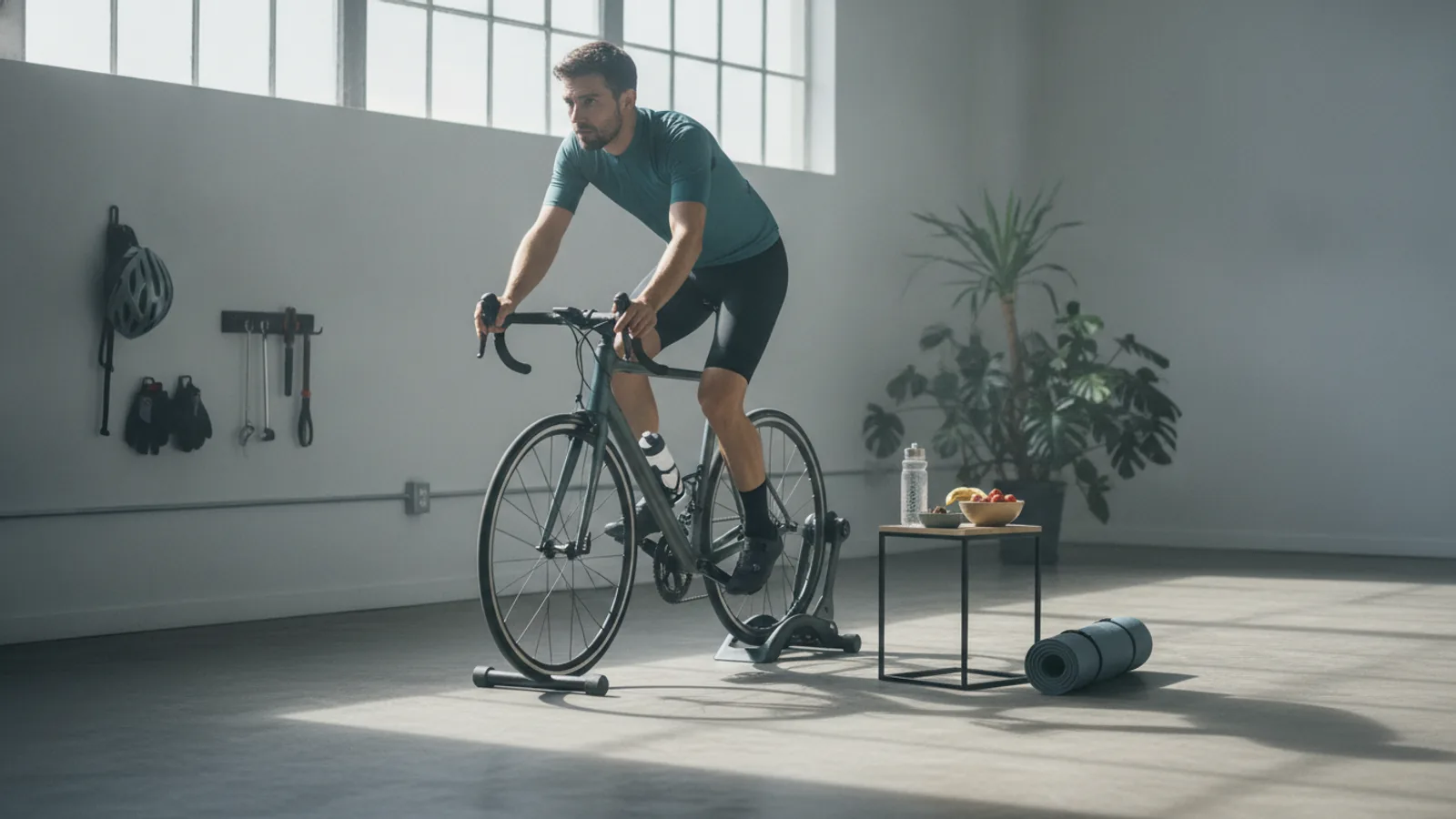
Both have their benefits. Outdoor cycling is more engaging, offers fresh air, and helps you practice bike handling skills. Indoor training is more time-efficient (no need to travel to a route), safer, and allows for highly structured workouts regardless of weather or daylight. A mix of both is ideal for year-round fitness.
How long should my rides be when I am just starting?
Start with what feels manageable. A duration of 20 to 30 minutes is a perfect starting point for a new cyclist. Focus on frequency (2-3 times a week) rather than duration. As your body adapts and your fitness grows, you can gradually increase the length of your rides by 10-15 minutes at a time.
Final Checklist for Bike Cycling Exercise
Use this quick checklist before you head out the door to ensure a great ride every time.
- Bike Fit Correct: Is your saddle at the right height for an almost-straight leg?
- Safety Check Complete: Have you verified your brakes, tyre pressure, and chain?
- Essential Gear Packed: Do you have your helmet, water bottle, and a basic repair kit?
- Route Planned: Do you know where you're going, and is the route suitable for your current fitness level?
- Workout Structured: Have you mentally planned for a warm-up, main effort, and cool-down?
- Listen to Your Body: Are you prepared to ease off or cut the ride short if you feel any sharp pain or excessive fatigue?